Article by Anonymous Art by Avy Diamond
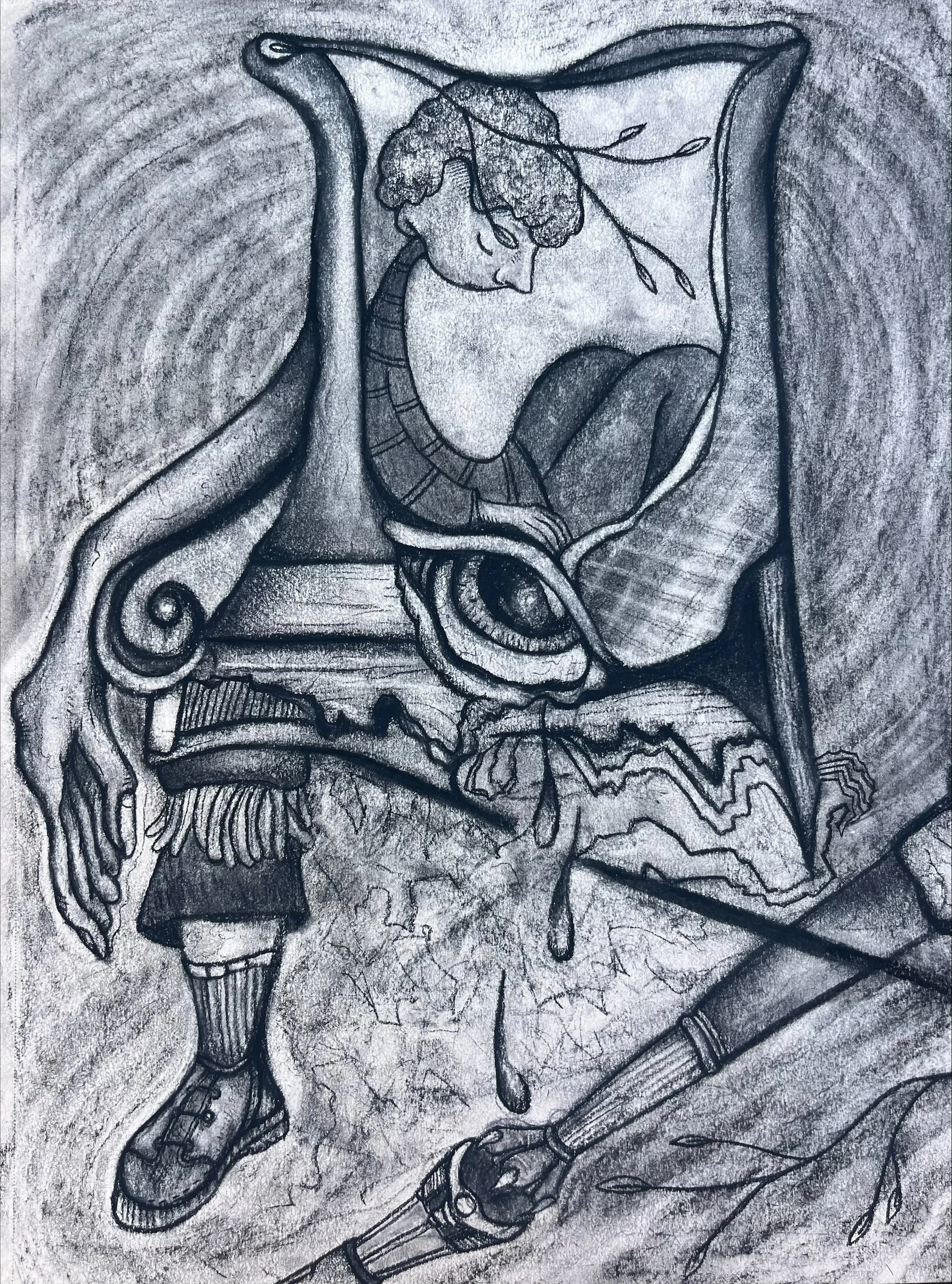
Unfortunately, for the majority of my childhood, I had a very avoidant attitude when it came to conflict with others, and especially when it came to conflict within my family. I had learned that the best way to stay out of trouble was to avoid disagreement. And lie. Of course, that's not how life works at all; I would still get caught and get in more trouble for what I did because I had lied about it. This was a near-constant battle between my parents and me. I would lie, get caught, get in trouble for it, apologize, and say that I learned my lesson, but the cycle would only continue. I always felt bad about what I had done, but my brain would still say that this is the path of least resistance. That all changed when I didn’t own up to my actions when I should have, and it inadvertently made my mom break down sobbing into my father's arms, feeling guilty about something she didn’t do.
My grandfather was one of the first 130 people to die in the US from COVID-19. His death turned my dad’s world upside down in ways that I am still discovering today. One of the few objects that my dad possesses to remember him by is this old leather chair that sits in his office. One day, I walked into the office to do something I can’t remember, but I do remember that part of the chair gave way when I sat down in it. Nothing shattered or tore, but something was no longer stable, though it appeared fine. So instead of telling my grieving father that I, his son, had hurt this chair that was so precious to him, I avoided it. I did more than avoid it; I lied by omission to my dad and lied to myself by saying that no one used the chair anyway, so it wasn’t a big deal. It became more than a big deal when my mother sat down in the chair weeks later, and it shattered. She didn’t know the chair was in such a fragile state, so she sat in it like anybody would, and it tore itself and broke under her.
My father and I quickly came running at the noise, and we found my mother sitting on the floor, hysterically sobbing, thinking that she had destroyed something that she hadn’t. She wouldn’t stop apologizing. She just sat there and wept while my father held her, telling her it was ok, and that it was just a chair.
I stood and watched all of this with a lump of lead in my stomach, knowing what my inaction had done to my mom. Within a day, I told them both everything in a fit of my own tears. I got in some trouble, but my dad and mom forgave me. I still think about that day. I think about it a lot, and remembering the pain I caused my mom still hurts me. I still lie, not as much as I used to. Only a normal human amount I think. But I’m not really sure how much that is supposed to be.
These last few paragraphs were written several weeks before this one. I recently talked with my father on the phone and mentioned the piece that I was writing for Cipher. I talked about how I was writing about the time I broke his chair all those years back. For several moments, he just looked at me. He then said, “You never told me any of this,” as disappointment took over his face. In my memory, I could’ve sworn that I told both my parents that day the truth. That I had broken the chair. According to my dad’s memory, I never did. The way he looked at me over the FaceTime call makes me believe that his memory might be right.
After all of my lying to my parents, I never expected my brain, my memories, to lie to me.
But why wouldn’t they? It was the path of least resistance.