Article by Sadie Hale Art by Liz White
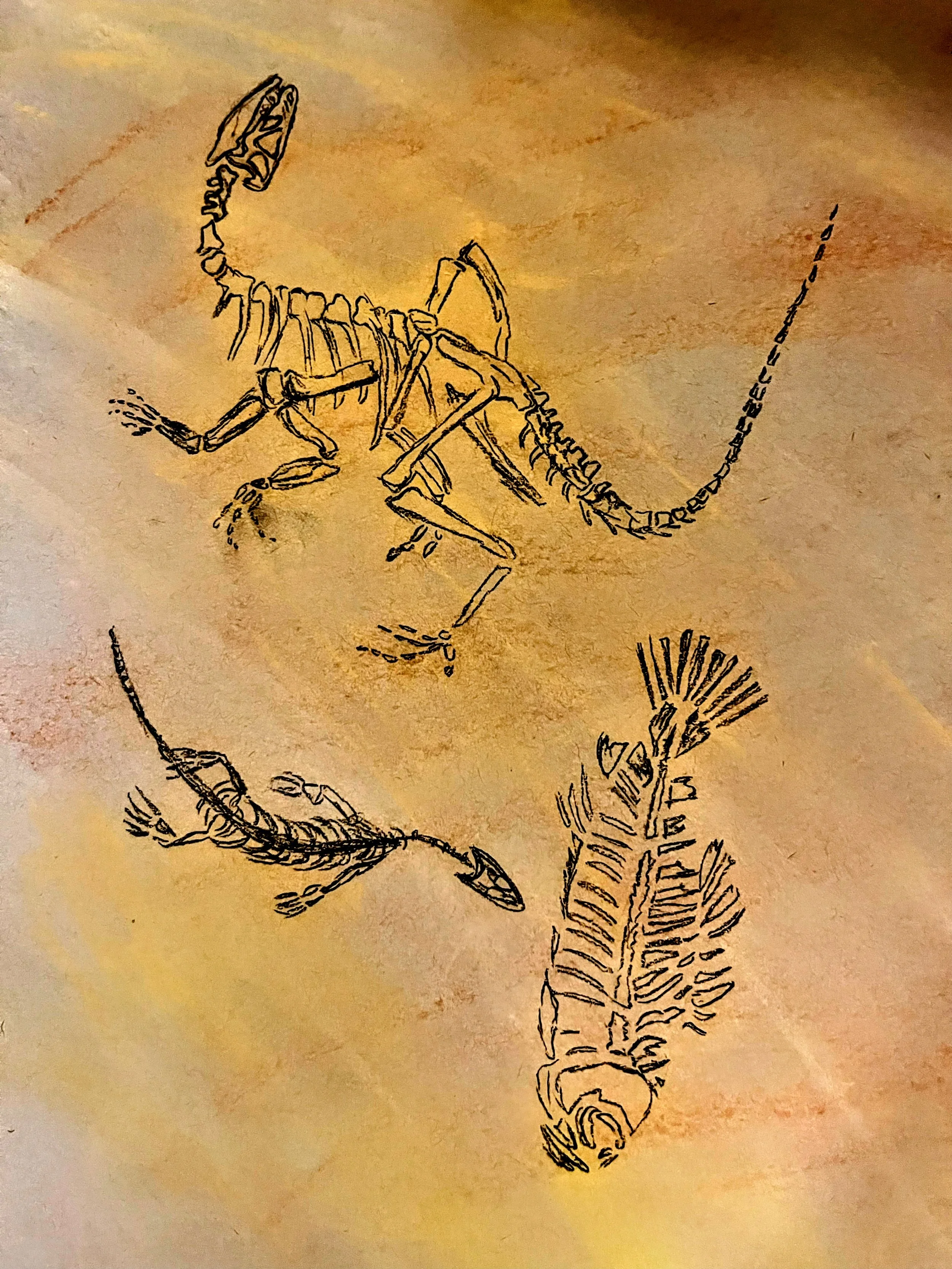
You can only run in so many routes on an island: you end up going around and around and around and around again. Lavender fields. Oyster farm. Old house full of clay pots. Jam store. Camp. Bakery. Lavender fields. There is a correctness to living on an island for a summer. A summer is the time for an island. An island is a summer of land. All those long days, spent in one place, become one day. In Washington, I was awake for 91 days straight. I just watched the waves roll up onto the same stretch of beach.
Sabine says that even when she’s home, she’s not really home anymore. This is difficult for me to interact with, like a very large number. I come from the most beautiful place. If Washington was your right hand, the part right between your pointer finger and thumb. There is no improving upon it. I went back there, to the islands, as a pilgrimage, the summer after my first year at college — it was a bad year at college. I was never going back to that school again. There was no way of knowing then if my future was going to get better or worse, and those were the only two options: better? Or worse? All I knew was that my first attempt at adulthood — at leaving — had failed.
I came to the island because I had been told there was work for me there. The work would be seasonal, a single summer, and it would be hard. But I needed hard work. I needed a chore, something that would keep my mind from wandering.
I joined the long line of cars waiting for the ferry boat that would bring us across the Salish Sea to Orcas Island. Orca whales, in particular Southern Resident pods J, K, and L, swim, hunt, and live in the waters surrounding the San Juan archipelago. They are sometimes visible from the islands’ shores, their smooth black saddles and jagged dorsal fins breaking through the waves. But the island is named after a man: a Spaniard, Horcasitas, who commissioned a colonial expedition to the region in 1791. It is shaped like a horseshoe. Someone had flung it across the water and it had landed upside down, spilling something into the Puget Sound. The orcas clicked and whistled in that water. They ate fish in that water. You could see them. You could drive to the top of a tall hill and look out at the Cascade mountain range in one direction, the Olympics in the opposite. This is how I have always lived, between these two spines. When one is in front, the other is behind.
I was very busy that summer. Everything was sandy, and I was almost never alone. They only paid me for eight hours a day, but I worked from the moment that I woke up in the cedar slatted bunk of an open-air cabin to the moment I fell asleep there at night. I set my alarm to vibrate so that it would wake me first and I could spend five minutes gasping myself awake in privacy. Then I would blare Here Comes the Sun. But I loved it. They trained me on it, on the beach I would live on. I knew blackberry, nettle, cedar and salmon. I was trained in otter, madrona, lavender and marijuana. I ate tater tots and grease. Sweet yogurt and oats. I stole chocolate bars from stacks of s’more supplies and ate them for breakfast. On my nights off, I went into the woods and slept in a swinging hammock, my down jacket under my head as the waves beat and beat and beat the shore. I wound down 25 MPH roads to coves, inlets, jetties. You can only drive so far on an island. To clear my head, I went up the one mountain again and again and again.
The children tugged on me from ear to arm, and I was always worried whether I was doing it correctly, and then I became too tired to worry and was just guilty instead. My freedom was so cherished and specific that I remember every second of it: the chile and maple latte, the mornings I spent in the library just sitting with my eyes closed in the air conditioning. My friends, my two friends, sitting in that one patch of grass. The work was so exhausting that when there was rest, there could be no distraction from it. I had to read poetry in my two hours off, not because I was far from my body but because I was so close to it. Machado, I have a type, and I always / find them. Aaron Smith, I want so desperately / to be finished with desire, / the rushing wind, the still / small voice. Calvocoressi, It will feel better than any floor / that’s risen up to meet you. It will rise.
I was mostly working, and when I wasn’t, I was very busy falling in love. I felt frantic all the time. We would escape on Saturday nights to a different pile of driftwood to drink beers and flirt. They would ask me to bring them tea with honey at night and I would put way too much in both of our mugs so it wouldn’t seem like I’d forgotten it in theirs. Cold and oversweet. The love was a part of my chore: as always happens to me, when I was around them I couldn’t eat, my stomach turning and turning over with emotion. I would call Annie and tell her about them, their landscape ribs and everywhere curls, how I would spend all day with the kids and then all night on the beach with them, pointing up at constellations and tracing the same shapes over their hands. Annie would pick up from the friend’s place in Martha’s Vineyard where she was working for the summer, and as we talked, we heard the ocean on both sides of the line. We missed each other even though good things were happening. I copied her texts into my journal, right next to the poems. Seidel, your life is anything you want it to- / and loves you more than it can show or tell. Annie, I am SO happy for you. Annie, God let me be this free forever.
I believe in this island more than I remember it. I went to it as a monk, and it delivered as a monastery. I would sit out late on the dock, watching the sun set onto the moon jellies, their translucent bodies, washed up on the beach. In the morning, they got poked with sticks by 12-year-olds. I took my girls around and around, pouring their milk. Is the ferry on fire? They asked me, watching the lights, moving across the water, almost burn.
A summer is an island of time. Famously, you have to go home. I was willing to make any kind of deal to any kind of power to not have to relinquish it, to relinquish them. No sleep no food sobriety new name shoeless through a desert hard work no pay. I was willing to do all of it, but of course I did none. God (my parents) did not have that in store for me. Colorado was calling. I left the island in so much love it was hard to walk. It was hard to see.
Here’s something: our weeks with the kids involved a one-night camp out on a different, private island off the island we were already on. There were two boats that traversed these islands: one big, flat-bottomed one, with bench seats all around for shuttling campers, and a smaller metal speedboat, mostly for supplies. The speedboat was called the Whalefish. Riding the Whalefish was one of the ultimate pleasures of camp, and potentially of my life. It went fast. The wind made talking impossible. It scoured across your face under the July sun, and between the ride and unloading the gear you had at least 45 uninterrupted minutes to do a job that was not looking after children. Once, in the Whalefish, the captain cut the engine, coasting and pulling the boat in a wide circle. We were in the water with four orcas. The calves, the bulls. They bayed and broke the surface, their milky black bodies, their sharpness and roughness only now visible. Killer whales. We were so close.